Oshawa Sign Permits & By-Laws
Oshawa sign permits explained: when you need one, how to avoid delays, and what the approval process actually looks like.

You've designed the perfect sign. You're ready to move forward. Then someone mentions permits.
Suddenly you're navigating City of Oshawa by-laws, trying to figure out if your sign needs approval, what forms to fill out, and how long the whole thing takes.
Here's the truth: most commercial signs in Oshawa require a permit. But the process doesn't have to be complicated.
Let's break down exactly when you need a sign permit in Oshawa, what the City looks for, and how to avoid the delays that trip up most business owners.
When a Sign Permit Is Required in Oshawa
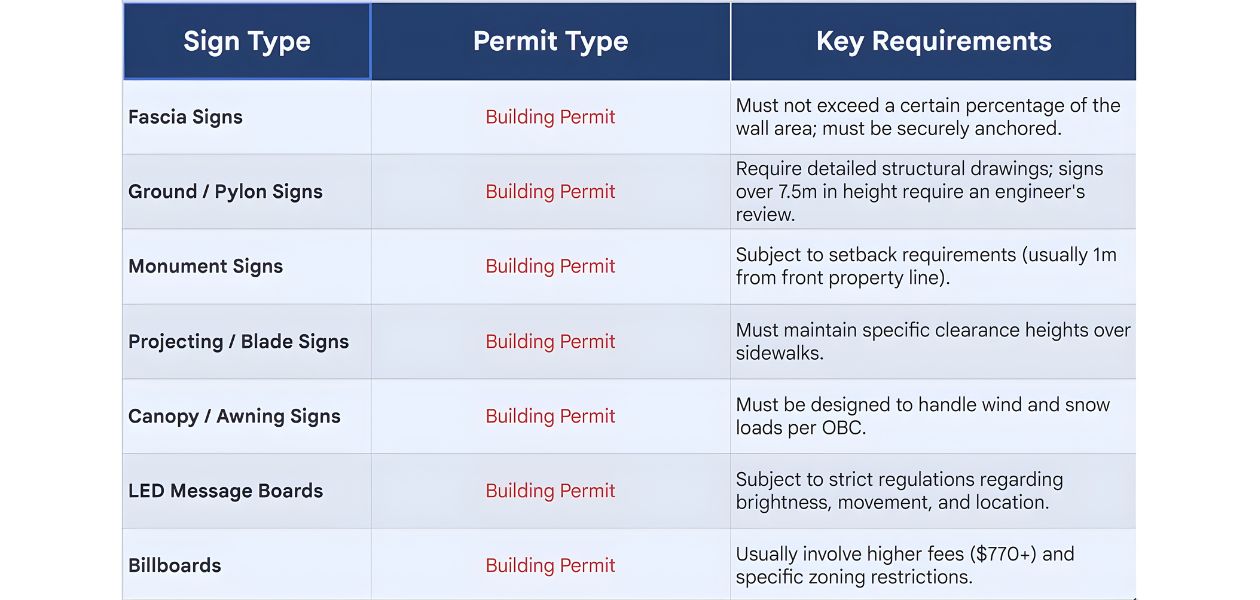
Not every sign needs City approval—but most do. Here's what typically requires an Oshawa sign permit:
Wall-Mounted Signs
Channel letters, lightbox signs, or any sign attached to your building's exterior wall. If it's visible from the street and attached to your building, you need a permit.
Freestanding Signs
Monument signs, pylon signs, and ground-mounted directional signs all require permits. These often need site plan approval in addition to a standard sign permit.
Projecting/Blade Signs
Signs that extend perpendicular from your building (common in downtown areas) need permits and must meet specific projection distance requirements.
Electronic Message Centers (EMCs)
Digital signs or LED message boards have additional regulations around brightness, animation, and placement.
Temporary Signs (In Some Cases)
Banners, A-frames, and promotional signage may need temporary permits depending on size, duration, and location.
What Doesn't Require a Permit?
- Small window decals (usually under 25% of window area)
- Interior signage not visible from the street
- Real estate signs (though size limits apply)
- Some minor directional signage on private property
When in doubt, check. The City of Oshawa's Planning Services can confirm whether your specific sign needs approval.
Common Mistakes That Delay Sign Permit Approvals
Most delays aren't about the sign itself—they're about incomplete applications or missing information. Here's what holds up approvals:
1. Missing Site Plans or Drawings
The City needs to see exactly where your sign will be located relative to property lines, parking areas, and other structures. A hand-drawn sketch won't cut it—you need scaled drawings.
2. Sign Size Exceeds By-Law Limits
Oshawa has specific size limits based on your property's frontage and zoning. If your proposed sign is too large, the application gets rejected and you start over.
3. Inadequate Setback Distances
Signs must be a certain distance from property lines, roadways, and sidewalks. Placing a sign too close to the street triggers a resubmission.
4. Lighting Issues
Illuminated signs have brightness limits and restrictions on flashing or moving elements. Overly bright signs or animated displays can violate by-laws.
5. Incomplete Applications
Missing signatures, unpaid fees, or incomplete forms automatically delay processing. The City won't review your application until everything is submitted correctly.
6. Zoning Conflicts
Some zones have stricter sign regulations than others. Commercial zones generally allow more flexibility than residential or mixed-use areas.
How the Oshawa Sign Permit Process Actually Works
Here's what happens from application to approval:
Step 1: Pre-Application Research
Before submitting anything, confirm your sign complies with Oshawa's Sign By-Law. Key things to check:
- Maximum sign area allowed for your property
- Height restrictions for freestanding signs
- Setback requirements from property lines
- Lighting and illumination limits
- Zoning-specific regulations
The City of Oshawa's Planning Services can answer questions before you apply.
Step 2: Prepare Required Documents
A complete application includes:
- Completed permit application form (available on the City's website)
- Scaled site plan showing sign location, property boundaries, and nearby structures
- Sign drawings with dimensions, materials, colors, and lighting details
- Photos of the existing building or site
- Proof of property ownership or tenant authorization
- Application fee (varies by sign type and size)
Missing any of these? The application doesn't move forward.
Step 3: Submit Application
Applications can be submitted in person at Oshawa City Hall or online through the City's planning portal. Once submitted, the City assigns a file number and begins the review process.
Step 4: City Review
The Planning Services department reviews your application against the Sign By-Law. They check:
- Compliance with size and height limits
- Setback distances
- Lighting regulations
- Zoning compatibility
- Safety and visibility concerns
If something doesn't comply, the City contacts you with required changes. You'll need to revise and resubmit.
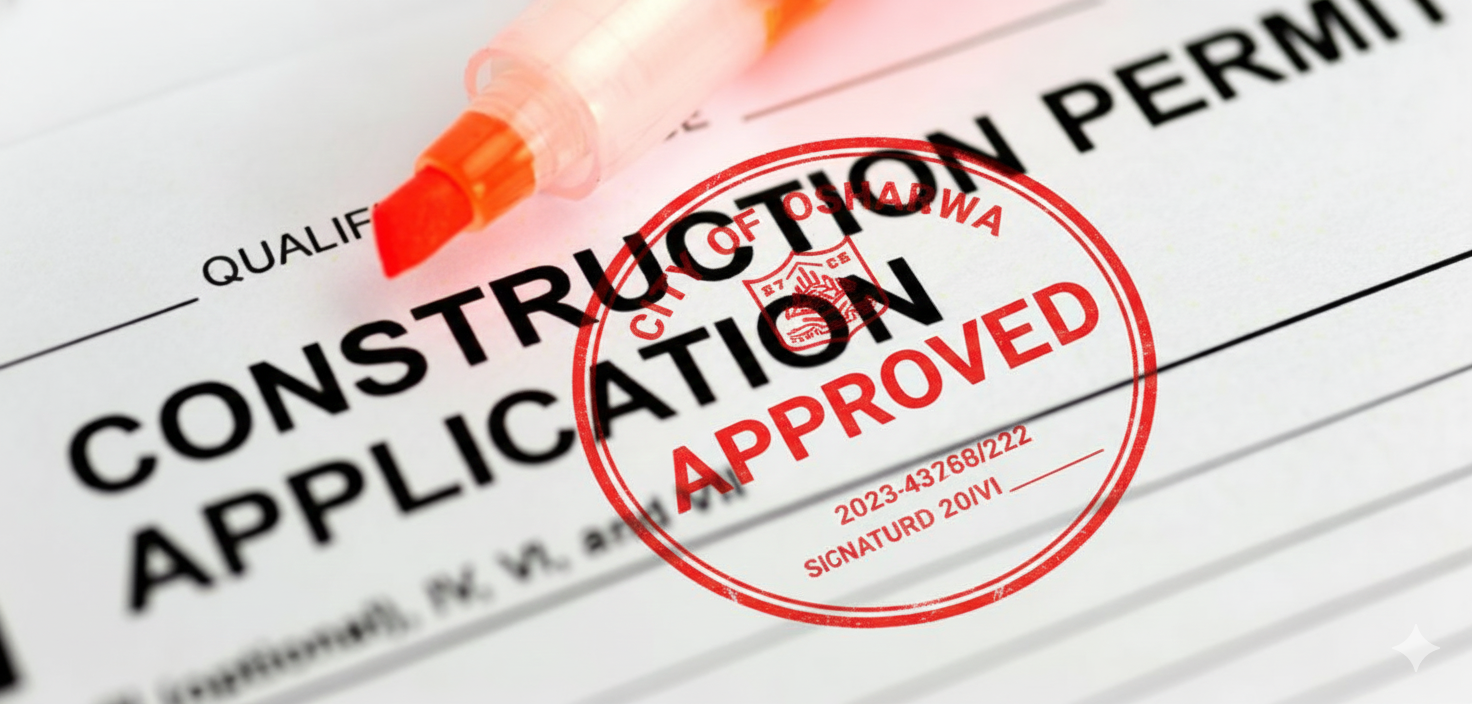
Step 5: Approval & Permit Issuance
Once everything checks out, the City issues your sign permit. This usually includes conditions like:
- Installation deadlines
- Final inspection requirements
- Maintenance obligations
You can now proceed with fabrication and installation.
Typical Timeline: 2–4 weeks for straightforward applications. Complex projects (large freestanding signs, digital displays) can take 6–8 weeks.
Step 6: Installation & Final Inspection
After installation, some signs require a final inspection by the City to confirm everything was built according to approved plans. Schedule this promptly to avoid compliance issues.
Key Oshawa Sign By-Law Requirements
Here are some common regulations business owners should know:
Sign Size Limits
Maximum sign area is usually calculated as a percentage of your building's street-facing wall or your property's frontage. Larger properties can have bigger signs.
Height Restrictions
Freestanding signs typically can't exceed 6–8 meters in height (varies by zone). Wall-mounted signs can't extend above the roofline.
Setback Requirements
Signs must be set back from property lines, usually 1–3 meters depending on sign type and location.
Illumination Standards
LED and internally lit signs must meet brightness limits (measured in nits or lumens). No flashing, moving, or animated elements except for approved electronic message centers.
Maintenance Requirements
Signs must be kept in good repair. Faded, damaged, or non-functional signs can result in orders to repair or remove.
How Calibre Signs Supports Permit-Ready Projects
Navigating Oshawa sign permits doesn't have to slow down your project. Here's how we handle it:
We Know the By-Laws
We've worked across Oshawa and Durham Region for years. We know what the City requires and design signs that comply from the start.
We Prepare Complete Applications
Site plans, scaled drawings, material specs, lighting details—we provide everything the City needs for a smooth review.
We Handle Submissions & Follow-Ups
You don't have to chase down approvals or respond to City requests. We manage the entire permit process on your behalf.
We Design for Approval
Before fabrication starts, we confirm your sign meets size limits, setback requirements, and lighting regulations. No surprises. No rejections.
We Coordinate Final Inspections
After installation, we schedule and coordinate any required City inspections so your project closes out properly.
Working with a sign company that understands Oshawa's permit process means fewer delays, no rejected applications, and a smoother path from design to installation
Real-World Example: Retail Sign on King Street
A retail client opening on King Street East needed illuminated channel letters. Here's how the permit process went:
Week 1: Site visit and measurements. Confirmed sign size complied with frontage-based limits and setback requirements.
Week 2: Submitted complete application with site plan, sign drawings, and lighting specs.
Week 3–4: City reviewed and approved. Minor clarification requested on mounting method—responded same day.
Week 5: Permit issued.
Week 6–7: Fabrication completed.
Week 8: Installation and final City inspection passed.
Total timeline: 8 weeks from consultation to finished sign. No rejections. No delays.
Before You Apply: Talk to a Local Signage Expert
The biggest mistake business owners make? Designing a sign, falling in love with it, and then finding out it doesn't comply with Oshawa's by-laws.
Save yourself the headache. Talk to a local sign company before you start the permit process. A quick consultation can:
- Confirm your sign concept is permit-ready
- Identify potential compliance issues early
- Provide realistic timelines
- Prepare a complete application the first time
We offer free consultations for Oshawa business owners planning new signage. Whether you're opening a new location or refreshing your existing storefront, we'll help you navigate the permit process smoothly.
Ready to Move Forward?
If you're planning commercial signage in Oshawa, don't wait until you're stuck in the permit process to get help. Let's review your project, confirm compliance, and prepare a permit-ready application.
Talk to a local signage expert before applying.
Need help with Oshawa sign permits?
Contact Calibre Signs today for a free consultation.