
How Do You Create a Signage Graphics Plan for Your Business?
Learn how to build a signage graphics plan that keeps your brand consistent, compliant, and built to last.
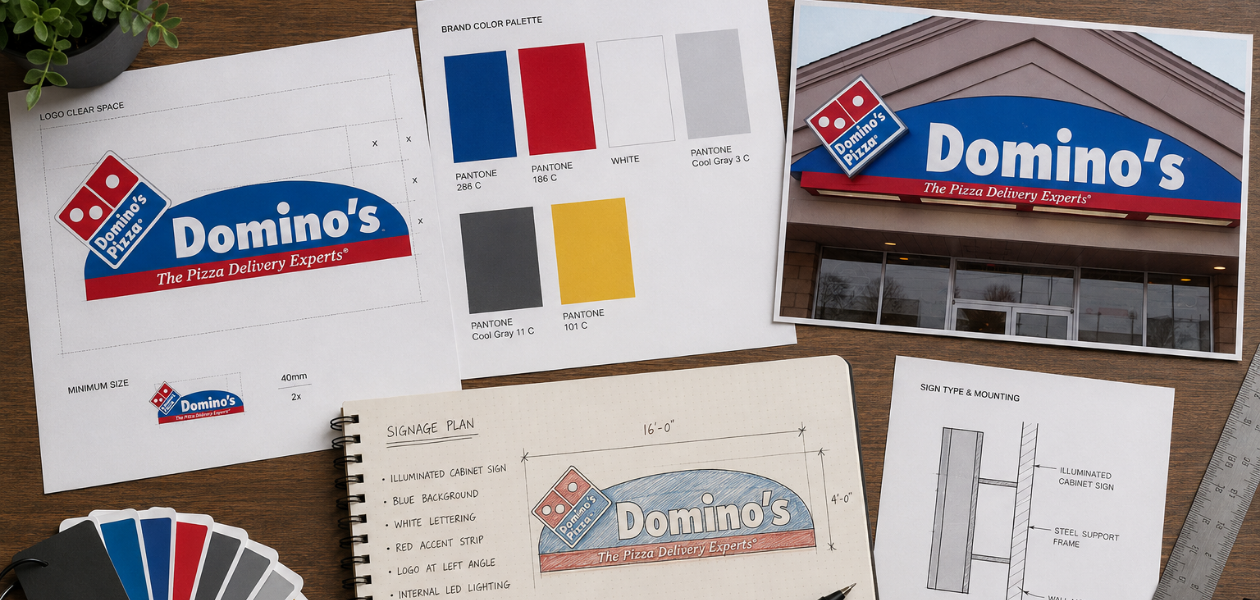
A signage graphics plan is a documented strategy that maps out every sign your business needs, where it goes, what materials it uses, and how it stays consistent across locations. It protects your brand, saves money, and prevents costly redesigns down the road.
Most businesses treat signage as an afterthought. They order a storefront sign, add a few window decals, print a banner for an event, and call it done. The problem is that none of it works together. Fonts don't match. Colors drift from location to location. Nobody remembers what vinyl was used on the last order, so the next one looks slightly off.
A graphics plan fixes that. It's the difference between signage that looks intentional and signage that looks assembled.
Why Does a Signage Graphics Plan Matter?
Consistency builds recognition. Customers should see the same brand whether they're pulling into your parking lot, walking through your lobby, or scrolling past your fleet vehicle on the highway. A plan keeps every touchpoint aligned.
It saves money over time. Reordering signage without a reference point means paying for redesign work you've already done once. A documented plan means your next sign order is a repeat, not a re-invention.
It protects you during growth. Franchises and multi-location businesses feel this the most. Without a plan, every new location becomes its own signage project, with its own inconsistencies. With one, rollout becomes a repeatable process.
It keeps you compliant. Municipalities regulate size, illumination, and placement. A plan built with those rules in mind avoids permit delays and rejected applications later.
How Do You Put Together a Signage Graphics Plan?
Start with an audit. Walk your property, or every property if you're multi-location, and list every existing sign. Note the material, condition, and dimensions of each one.
Define your brand standards. Lock down your logo files, color codes (Pantone, CMYK, and RGB), typography, and any spacing rules. This becomes the reference document every future sign gets checked against.
Map the signage you actually need. Not every business needs the same sign types. Group them by function so nothing gets missed.
Set material and quality standards. Decide upfront what substrates, vinyl grades, and illumination types meet your bar. This is where working with a manufacturer who fabricates in-house pays off, since consistency in materials is easier to control when one team produces everything.
Plan for permits early. Sign bylaws vary by municipality, and approval timelines can stretch a project by weeks. Build permit lead time into your plan from day one rather than discovering it mid-project.
Assign an owner. Someone on your team, or your signage partner, should hold the master file and approve any deviation from it.
What General Signage Do Most Businesses Need?
A typical commercial signage plan covers:
- Exterior identification signage: channel letters, pylon signs, monument signs, and awning graphics that identify your business from the street
- Interior signage: wayfinding, lobby branding, and directional signs that guide customers inside
- Window and door graphics: hours, promotions, and entry decals
- Vehicle branding: full color vehicle graphics, spot graphics, lettering, and magnetic signage for fleet vehicles
- Promotional signage: banners, feather flags, and temporary displays for events or seasonal campaigns
- Regulatory and safety signage: ADA-compliant signs, parking signage, and any signs required by local code
Not every business needs all six categories on day one. The plan should note which ones apply now and which ones get added as the business grows.
How Do You Plan for Signage Longevity?
Match material to environment. A sign facing direct south sun needs different vinyl and substrate than one mounted under an awning. Planning for exposure upfront prevents premature fading and cracking.
Factor in lighting maintenance. Illuminated signage needs a servicing plan, not just an installation date. LED retrofits extend lifespan and cut energy costs, but only if they're scheduled before older components fail completely.
Build in a replacement cycle. Vinyl, paint, and lighting components all have a usable lifespan. A plan should note expected replacement windows so budgeting isn't a surprise.
Why Does Product Quality Matter in a Graphics Plan?
Cheap materials cost more over time. Faded vinyl, cracked substrates, and flickering LEDs all damage brand perception before a single word of your marketing gets read. A signage plan should specify minimum material grades so quality doesn't quietly slip on future orders, especially if multiple vendors ever get involved.
Quality also affects consistency. Two signs made from different vinyl grades can show visibly different colors within a year, even if they started out matching.
What Are the Most Common Signage Planning Mistakes?
Skipping the brand file. Without locked color codes and logo files, every reorder introduces small drift.
Ignoring permits until the last minute. Permit delays are one of the most common reasons signage projects fall behind schedule.
Treating each location as a one-off. Franchises especially fall into this trap, approving slightly different signage at each site until nothing matches.
Choosing materials on price alone. The cheapest vinyl or substrate often needs replacing sooner, which erases any upfront savings.
No single point of ownership. When nobody owns the plan, updates get made inconsistently and old files get lost between staff turnover.
The Bottom Line
A signage graphics plan isn't extra paperwork. It's what keeps your brand looking the same from your first location to your fiftieth, and what keeps you from re-solving the same design problems every time you need a new sign. Start with an audit, lock in your brand standards, and build material quality and permits into the plan from the beginning.
Ready to build a signage plan that scales with your business? Get in touch with Calibre Signs for a consultation.


.jpg)