Why Do Sign Lights Fail in Winter and What Does a Maintenance Plan Actually Cover?
Cold, salt and condensation take down sign lighting every winter. Here's what fails and what a service plan covers.
Short answer
Winter fails sign lighting through a different mechanism than summer heat: freeze-thaw cycling on gaskets and seals, road salt corroding raceways and mounting hardware, condensation trapped inside sign cabinets, and ballasts or drivers that were already marginal finally giving out under cold-start stress, all while shorter days mean your sign is lit for more hours than it was in July. A lighting servicing and maintenance plan is built around catching these failures before they take a sign fully dark.
Why Does Cold Weather Hit Sign Lighting Harder Than Summer Heat?
Summer heat stresses electronics; winter stresses everything mechanical. A summer post on sign lighting deals with drivers and LED modules overheating inside a hot cabinet. Winter is the opposite failure mode: it's the physical seals, gaskets and connections that take the damage, not the electronics themselves, at least not directly.
Freeze-thaw cycling is the core mechanism. Every time temperatures cross the freezing point, moisture that's worked its way into a seam or a gasket expands and contracts. Over a Canadian winter that can happen dozens of times, and it's what eventually cracks a seal that held up fine all summer.
What Actually Fails First?
Gaskets and seals go before anything electrical does. Once a gasket has cracked from repeated freeze-thaw cycling, the cabinet is no longer sealed against moisture, and everything downstream, ballasts, drivers, wiring connections, is now exposed to conditions it wasn't designed for.
Condensation inside the cabinet is the next stage. A sign that's sealed against rain can still develop internal condensation as temperatures swing between a cold night and a sunlit day. That moisture sits on components rather than draining away, which is where corrosion actually starts.
Ballasts and drivers tend to fail on the cold start, not gradually. A component that's been degrading quietly through the fall often makes it through until the first genuinely cold morning, when the extra current needed to start a cold lamp finally pushes a marginal ballast or driver past its limit.
How Does Road Salt Factor In?
Salt spray reaches signage that rain never would. Any sign mounted near a roadway, a parking lot entrance, or a plaza drive aisle is exposed to salt-laden spray kicked up by traffic and by plows, all winter long, in a way that has no summer equivalent.
Raceways and mounting hardware corrode from the outside in. Salt accelerates corrosion on the metal raceway that carries wiring to a sign and on the fasteners holding the sign to the wall or pylon. Once a raceway has corroded through, moisture has a direct path to the wiring inside.
This is why identical signs in different locations age differently. Two channel letter installations of the same age, one set back from the road and one right at a plaza entrance facing a plowed lot, will show completely different rates of corrosion, because one has spent several winters absorbing salt spray and the other hasn't.
Why Do Sign Failures Show Up More in Winter Even When the Cause Is Older?
Longer illumination hours mean more run-time on already-stressed components. Short winter days mean signs are lit for more hours per day than in summer, which puts more cumulative load on a ballast or driver that's already been weakened by moisture or corrosion.
A failure that was months in the making often looks sudden. By the time a sign actually goes dark or starts flickering, the underlying cause, a cracked gasket, corroded raceway, or degraded ballast, has usually been developing for a full season or more. The visible failure is the end of the process, not the start of it.
What Does a Sign Lighting Maintenance Plan Actually Cover?
Repair covers lamps, ballasts, transformers and LED modules across sign types. Whether a sign uses traditional electric components, LED modules or a digital display, a maintenance program is built to diagnose and fix the specific failure rather than replace the whole unit.
The value is in catching problems before a sign goes fully dark. A sign that's flickering, dimming unevenly, or showing a partial failure is telling you something before it fails completely; a maintenance relationship means that gets addressed on a scheduled basis rather than only after a customer calls to say your sign is out.
For operators managing several locations, one point of contact matters more than the repair itself. Coordinating lighting repairs across multiple sites individually, different vendors, different response times, different invoices, is its own operational burden. A single service relationship covering every location removes that overhead.
Is It Worth Retrofitting Before Winter Rather Than Waiting for a Failure?
An LED retrofit removes some of winter's failure points before they happen. Replacing older components with LED lighting retrofits reduces the internal heat and electrical stress that contributes to component failure, on top of the energy savings retrofits are usually chosen for in the first place.
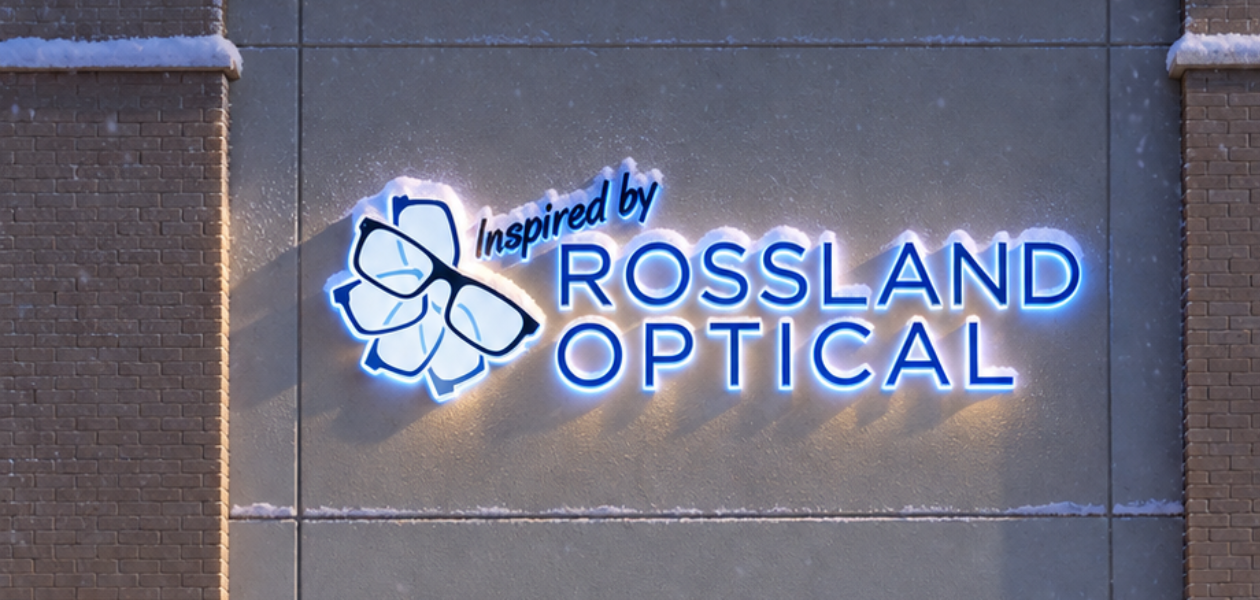
Newer channel letter systems are built with this in mind. Modern back-lit and halo-lit channel letters use internal LED modules designed around lower heat output and tighter sealing than the electric components they replaced, which is part of why a retrofit ahead of winter is worth evaluating rather than waiting for a cold-morning failure to force the decision.
The Bottom Line
Winter fails sign lighting differently than summer does, through freeze-thaw cycling, road salt, trapped condensation and cold-start stress on components that were already marginal, and the visible failure is usually the last step in a process that's been running for months. A maintenance plan built around this pattern, and a retrofit where it makes sense, keeps your signage lit through the season instead of dark on the coldest morning of the year.
Get a quote on a winter-ready lighting maintenance plan.