What Are the Biggest Sustainability Trends in Commercial Signage Right Now?
Sustainable signage is moving past recycled vinyl. Here's what materials, regulations, and buyer expectations look like in 2026.
Sustainability in signage has moved from a nice-to-have to a procurement requirement. The biggest shifts are corporate ESG reporting rules trickling down to vendors, substrates moving away from virgin PVC toward recycled aluminum and biodegradable materials, and buyers increasingly specifying recyclability and energy efficiency before they even ask about design.
If you're planning a new location, a rebrand, or an overdue lighting upgrade, here's what's actually driving this shift and what it means for your next sign project.
Why Is Sustainability Suddenly a Bigger Deal in Signage?
Three things are pushing in the same direction at once.
New emissions reporting rules are reaching vendors, not just big corporations. California's SB 253 requires companies with revenue over USD 1 billion to publicly report their emissions starting in August 2026. That rule targets large corporations directly, but its effects reach the entire supply chain, including sign vendors. National brands and franchise networks are already specifying material types, recyclability, and energy efficiency in vendor agreements.
Substrates are moving away from virgin plastic. The industry is shifting toward a PVC-free lifecycle, prioritizing recycled aluminum, responsibly sourced wood, and recycled plastics. Production is following the same path, with water- and plant-based inks replacing older options.
This isn't a niche preference anymore, it's a market-wide shift. Manufacturers now have real incentive to swap traditional PVC for biodegradable or fully recyclable paperboard and fabric alternatives to meet corporate ESG targets. Broader forecasts back this up, showing sustainability reshaping procurement priorities even when the lower-impact option costs more upfront.
What Does This Mean for Your Next Sign Project?
Substrate selection happens earlier. Instead of defaulting to standard acrylic or PVC, material choice is now part of the initial design and fabrication conversation, especially for franchise and multi-location clients with sustainability commitments to meet.
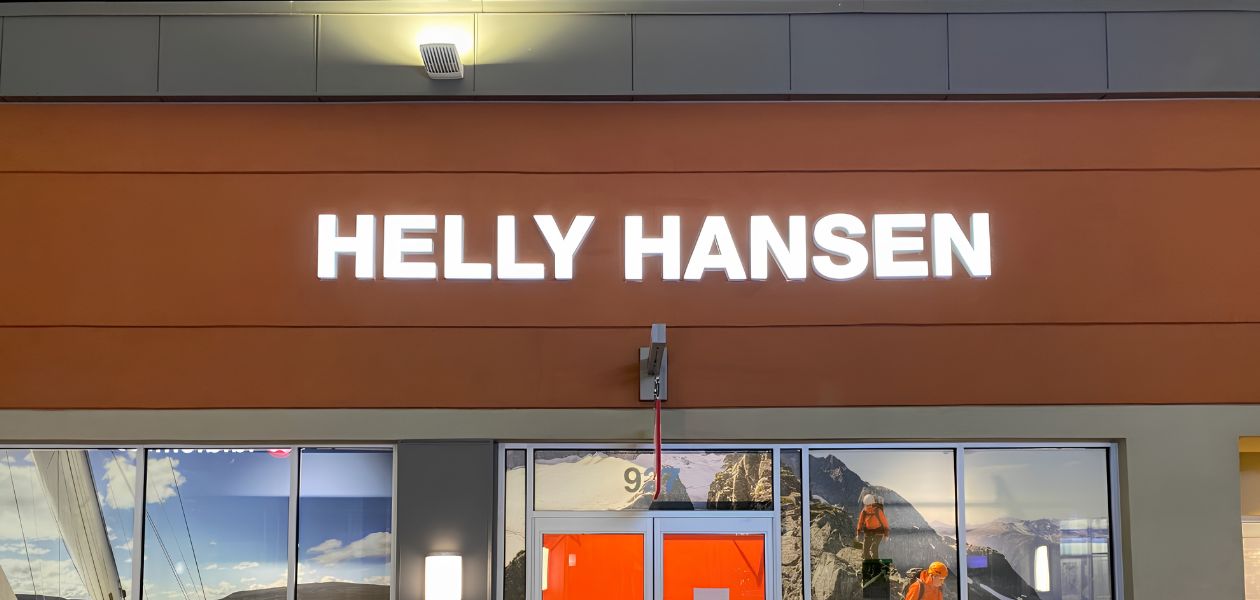
LED conversion does double duty. Retrofitting older illuminated signage to LED cuts energy draw and maintenance costs while meeting the lower operational carbon footprint expectation that's becoming standard in vendor RFPs.
Durability counts as sustainability too. A sign box or channel letter setup built to last 10 to 15 years is lower-impact than one remade every 3 to 5 years, no matter what it's made from. Build quality and engineering matter as much as the substrate label.
What Drives the Cost of a Sustainable Sign Project?
Sustainable materials don't automatically mean a higher price, but a few things move the number:
- Substrate type. Recycled aluminum and responsibly sourced wood composites run comparable to or slightly above standard acrylic, depending on supplier and volume. Paperboard and fabric options are the most cost-effective for temporary or promotional signage.
- LED retrofit vs. new fabrication. Retrofitting an existing cabinet is almost always cheaper than fabricating a new sign, while still delivering most of the energy savings.
- Order volume. Multi-location rollouts benefit from the same economies of scale on sustainable substrates as standard materials. A 20-location LED retrofit costs meaningfully less per unit than a single-location job.
- Permit and engineering requirements. Material changes sometimes need updated engineering drawings for permit approval, especially for larger exterior signs with wind load requirements. It's a fixed cost regardless of substrate, but worth budgeting for.
- Installation complexity. Swapping substrates on an existing structure is usually simpler and cheaper than a full replacement, since mounting and electrical work can often be reused.
The Bottom Line
Sustainability in signage has gone from a talking point to a procurement requirement, especially for national brands and franchise networks answering to their own ESG commitments. The businesses ahead of this are building material selection and LED conversion into standard planning, not bolting it on at the end.
If you're planning a rebrand, a new location, or a lighting upgrade that's overdue, it's worth asking what substrate and lighting options are on the table before defaulting to what you've always used.
Contact Calibre Signs for a quote on your next sign project.